
In 2026, 3PL warehouses are under pressure from every side, retailer EDI rules, faster order windows, chargeback risk, and clients who expect flawless service every day. EDI, short for Electronic Data Interchange, is the system that sends orders, shipment updates, and invoices between trading partners, and when you manage many clients and sales channels, it can’t sit outside your warehouse workflow.
That’s why many operators choose Leanafy. It brings warehouse operations and EDI together in one system, and its SPS Commerce EDI integrations help you connect with retail partners without piling on manual workarounds. Next, it helps to look at why that setup matters so much for multi-client 3PL teams.
What 3PL warehouses really need from EDI today
For a modern 3PL, basic document exchange is no longer enough. You need speed, accuracy, visibility, and control across every client account, every warehouse, and every shipment status.
That matters even more in 2026. Clients expect faster onboarding, retail partners want tighter compliance, and operations teams can’t afford extra touches just to keep orders moving. At the same time, many warehouses now juggle EDI, APIs, and file-based connections in the same workflow. If those connections do not feed the warehouse system cleanly, small data issues turn into floor-level problems fast.
Retail and client requirements keep getting harder
Retail and client compliance has become a daily operating issue, not a side task for the IT team. One customer may need strict purchase order rules, another may demand exact ASN timing, and a third may reject invoices or labels over a small formatting mistake. For a 3PL, that means every client comes with its own playbook, and the warehouse has to follow all of them at once.

The pressure shows up in the details. A bad item code, a missed carton count, or a shipment update sent too late can trigger delays, retailer fines, or client complaints. According to Amazon’s 2026 EDI compliance guide, ASN errors alone can lead to meaningful penalties when shipment data does not match what arrives.
That is why 3PL teams need more than a system that simply sends files. They need EDI that can validate data early, catch problems before a truck leaves, and support quick partner onboarding when a new client lands. A helpful reference is Leanafy’s EDI for 3PL warehouses guide, which shows why cleaner data flow matters before the first pick starts.
In a 3PL, one EDI mistake rarely stays inside EDI. It usually turns into a receiving delay, a shipping issue, or a billing dispute.
Manual work creates errors that slow the warehouse down
When teams rekey purchase orders, correct bad addresses by hand, or chase missing shipment updates through email, the warehouse pays for it twice. First, it loses labor time. Then it absorbs the cost of mistakes.

Manual touches create a chain reaction. A typo in an order can send pickers to the wrong location. A missing pack detail can break label generation. A late shipment notice can leave the client blind when they need an answer right away. As a result, supervisors spend time fixing avoidable problems instead of keeping work flowing on the floor.
This is where many 3PLs hit a wall. Standalone EDI tools may pass documents along, but they often leave warehouse teams to clean up the mess downstream. Current 2026 pressure makes that model harder to defend because clients expect near real-time updates and shorter launch timelines. As recent 3PL trend coverage points out, real-time visibility and tighter system integration are becoming standard expectations.
A better setup reduces rework at the source. If order data, shipment status, inventory, and label logic stay connected, teams spend less time chasing fixes and more time shipping accurately.
Multi-client operations need one clear source of truth
Most 3PLs do not run one simple workflow. They manage many brands, service levels, routing rules, warehouses, and inventory positions at the same time. In that kind of environment, disconnected systems create confusion fast. One platform shows the order, another shows the inventory, and a third holds the EDI status. When something goes wrong, your team wastes time figuring out which screen to trust.

A 3PL needs one clear operational record, and that usually means the WMS has to sit close to the EDI layer. When the warehouse system and EDI work together, order imports, inventory updates, shipment confirmations, invoices, and client-specific logic stay aligned. That gives teams cleaner data, faster exception handling, and fewer surprises across sites.
This is also why faster onboarding matters. If bringing on a new client takes weeks of custom patches between separate tools, growth gets expensive. A WMS with strong EDI connectivity supports mixed integration needs, including EDI, API, and file-based feeds, without turning every new account into a one-off project. Leanafy covers this well in its overview of EDI integration with WMS.
For 3PLs, the goal is simple. EDI should not sit off to the side as a document mailbox. It should work inside the daily warehouse flow, where accuracy, timing, and visibility actually matter.
Why Leanafy stands out as an EDI-ready WMS for 3PLs
A lot of warehouse software can connect to EDI. That alone is not the win. What 3PLs need is a warehouse system that turns incoming EDI data into receiving tasks, pick work, shipment updates, and inventory moves without extra cleanup in the middle.
That is where Leanafy separates itself. It is built for day-to-day warehouse execution first, and it supports EDI connectivity through SPS Commerce so trading partner data feeds the work your team already does. For high-growth 3PLs, that means fewer disconnected tools, less rekeying, and a much shorter path from customer requirement to warehouse action.
EDI works with the warehouse, not beside it
When EDI lives outside the WMS, teams end up acting like human connectors. Someone checks the order file, someone else keys it into the warehouse system, and another person chases shipping status later. Every handoff adds delay and risk.
Leanafy fixes that by keeping warehouse execution close to the data flow. Orders that arrive through EDI can move straight into receiving, picking, packing, and shipping workflows. Inventory updates and shipment activity can also flow back out with less manual effort. That matters because floor teams do not need another dashboard to babysit. They need the next task to be clear and ready.
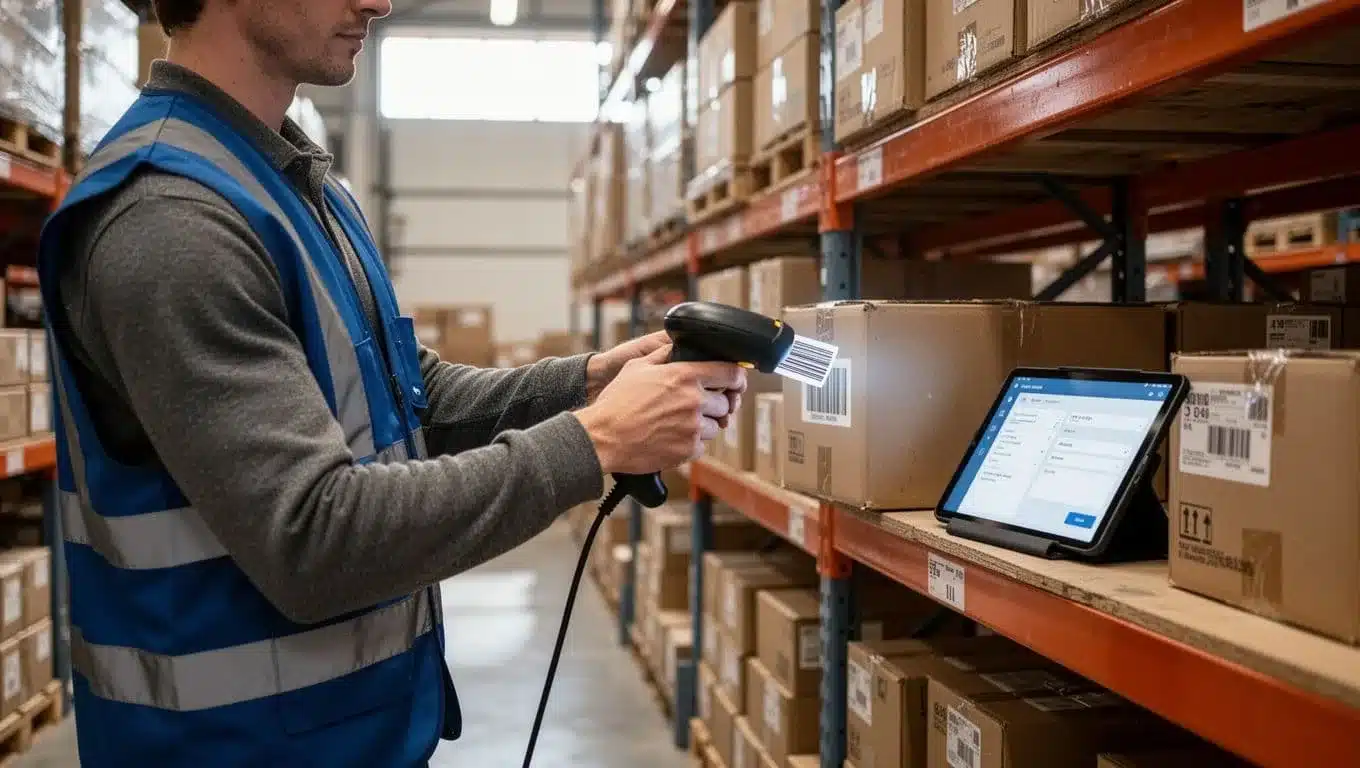
In practice, this changes the pace of the warehouse. A purchase order is not just a document sitting in an inbox. It becomes actionable work. A shipment confirmation is not a separate admin task. It ties back to what was packed, labeled, and loaded. Because the data and the warehouse steps stay connected, supervisors spend less time translating information between systems.
That is also why the product foundation matters. Leanafy’s multi-client 3PL warehouse management gives operators control over receiving, inventory, picking, and shipping in one place. EDI becomes part of the workflow, not a side project the ops team has to manage around.
A warehouse runs best when the system acts like air traffic control, not a message board. Incoming data should direct the next move on the floor. Outbound activity should update clients and partners without someone stitching it together by hand. Leanafy is built around that idea.
For a 3PL, the best EDI setup is the one your floor team barely has to think about because the work is already where it belongs.
SPS Commerce adds trusted EDI connectivity
Leanafy supports EDI through SPS Commerce, and that is a real advantage for 3PLs. SPS Commerce is a well-known EDI partner with a broad trading partner network and established retail compliance support. So instead of trying to build every map, document flow, and retailer rule from scratch, you start with a proven connection model.
That lowers risk right away. Retail EDI is full of moving parts, document specs, timing rules, partner changes, and compliance checks. If your team tries to own all of that internally, every new client can turn into a custom IT project. Costs rise, launch timelines slip, and errors show up where they hurt most, in chargebacks and missed shipments.

With SPS Commerce in the picture, Leanafy users get a stronger path to partner onboarding and compliance support. That is especially helpful for 3PLs that manage many brands with very different retailer requirements. One client may need strict ASN timing. Another may care most about inventory feeds or shipment notices. A trusted EDI partner helps absorb that complexity before it turns into warehouse friction.
SPS also speaks directly to the 3PL use case. Its 3PL EDI overview highlights faster partner connections, automated data exchange, and formatted data flowing into warehouse systems. Those benefits line up with what 3PL operators want most, which is less manual work and fewer compliance surprises.
There is another reason this matters. A 3PL does not sell EDI software. It sells reliable execution. By pairing warehouse operations in Leanafy with SPS Commerce connectivity, you reduce the odds that EDI becomes a fragile side system that breaks when volume climbs or client needs change.
Built for multi-client, multi-warehouse growth
Growth creates pressure in places older systems often cannot handle. More clients mean more account rules. More buildings mean more inventory locations. More SKUs mean more chances for mismatches, short ships, and support tickets. A 3PL WMS has to keep all of that organized without forcing you into a replacement project every few years.
Leanafy is built for that model. Client portals give each account the visibility they expect without exposing unrelated data. Real-time inventory views help your team answer status questions fast. SKU tracking supports the detail needed for modern fulfillment, whether the issue is lot movement, order allocation, or simple location accuracy.
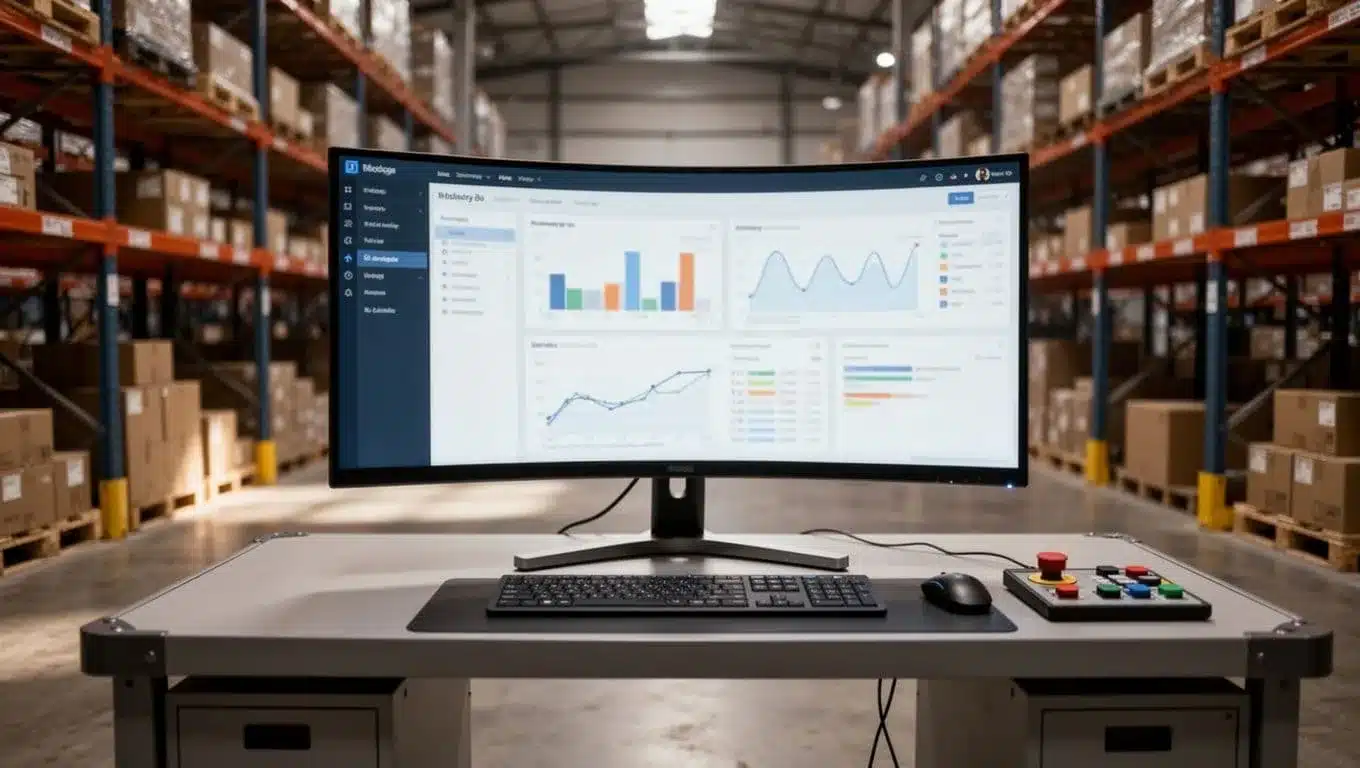
For 3PLs, that structure matters because growth rarely happens in a neat line. You might add a new client with retailer EDI needs, open a second warehouse, or expand SKU counts for an existing account all in the same quarter. If your WMS cannot support that mix, the operation starts to bend around system limits.
Leanafy gives you room to grow across sites as well. Its multi-warehouse management with Leanafy shows how inventory, orders, and daily execution can stay visible across a distributed network. That is a better fit for 3PL operations than patching together separate tools for each building or client.
A few strengths matter most here:
- Client-facing visibility stays clean, so brands can check inventory and order status without constant emails.
- Real-time SKU and inventory tracking helps your team trust what is on hand and where it sits.
- Multi-warehouse support keeps expansion practical, because new locations do not need an entirely new operating stack.
- EDI connectivity through SPS Commerce fits into that growth path, so onboarding more partners does not mean rebuilding your core process.
The result is simple. Leanafy gives 3PLs a warehouse platform that can execute today and scale with the business tomorrow. That is why it stands out as an EDI-ready WMS, not just a system that happens to connect to EDI.
The biggest reasons 3PL teams choose Leanafy over patchwork solutions
For most 3PLs, the real choice is not “EDI or no EDI.” It is one connected operating system versus a pile of tools that force your team to fill the gaps. A disconnected setup can look cheaper at first, especially if you already have a WMS, spreadsheets, email threads, and a standalone EDI platform. But once volume grows, those handoffs become the problem.
Leanafy fits better because it connects EDI activity to the warehouse work that follows. Orders, inventory, shipping, and billing stay closer together, so teams spend less time translating data and more time moving product.
Faster onboarding for new clients and trading partners
Speed matters because 3PLs often win new business on how fast they can launch. If a prospect hears “we can go live in weeks, not months,” that gets attention. On the other hand, patchwork setups usually mean more mapping, more testing, and more back-and-forth between ops, IT, and outside vendors before the first order ships.
Leanafy helps cut that friction. Because warehouse workflows and EDI connectivity are tied to the same system, new client setup is clearer from the start. Your team can define receiving rules, inventory logic, shipping steps, and document flow in one place instead of chasing details across separate systems and shared spreadsheets.
That matters more as trading partner requirements pile up. Orderful’s take on reducing EDI integration debt points to the same issue, every custom connection adds ongoing maintenance. A connected platform keeps new business from turning into a custom project every time.
Better accuracy, fewer chargebacks, fewer service issues
Most warehouse mistakes do not start on the floor. They start with bad or late data. A wrong item code, a missing ASN detail, or an inventory total that lives in yesterday’s spreadsheet can snowball into the wrong shipment, a retailer fine, or an invoice dispute.
Leanafy reduces those gaps because warehouse actions and data updates stay connected. When receiving, picking, packing, and shipping all pull from the same operating record, there is less room for drift between what the system says and what actually happened. That is a big reason teams look for WMS strategies to reduce warehouse errors, especially when chargebacks and rework start climbing.
You can picture the difference in a simple case:
- A patchwork setup may accept the order in one tool, track stock in another, and create the shipment notice later.
- A connected setup keeps those events linked, so the shipped quantity, carton data, and status updates stay aligned.
- As a result, client service teams answer fewer “what happened to this order?” emails.
An easier system for warehouse teams to actually use
Technical power matters, but usability matters just as much. If the system is awkward on the floor, people work around it. Then the spreadsheet comes back, the sticky note returns, and the clean data you wanted disappears.
Leanafy gives 3PL teams an interface they can actually work with day to day. Mobile access helps supervisors and floor staff stay close to the task. Barcode scanning support makes common steps faster and more consistent. Clear handheld flows also reduce training time, which matters when turnover is high or seasonal labor ramps up.
That is why barcode scanning for inventory accuracy is more than a feature box. It helps turn the right process into the easy process. New hires do not need to memorize tribal knowledge from three different systems. They can follow the workflow, scan at the point of work, and keep moving.
A warehouse team will not trust software that slows them down or makes simple tasks harder than they need to be.
More value than buying a standalone EDI tool alone
A pure EDI platform can be very strong at document exchange. It may handle mapping, partner specs, and compliance rules well. That is useful. But 3PLs also need to run the warehouse after the document arrives.
That is where standalone EDI tools often stop short. They do not control receiving, location moves, pick paths, packing checks, shipping workflows, client visibility, or warehouse reporting. So the 3PL still ends up stitching together a second layer of work outside the EDI platform, often with manual fixes in the middle.
Leanafy gives more practical value because it covers the warehouse side too. It brings execution, inventory control, and reporting into the same environment as the data flow, which is why many operators prefer a cloud-based WMS for 3PL providers over another disconnected add-on. If your team needs documents to move cleanly and the floor to run well, that broader fit usually wins.
How Leanafy helps 3PL warehouses run smoother every day
The value of EDI shows up on the floor, not just in the file transfer. When Leanafy connects order data, inventory, shipping, and client updates inside the same workflow, daily work gets easier to manage. Teams spend less time fixing handoff problems, and clients get a service level they can actually feel.
That shift matters because 3PL performance is judged in small moments. Did the order hit the queue on time? Did the picker get the right task? Did the client see the update before they had to ask? Leanafy helps tighten those moments into one clean operating rhythm.
Cleaner order flow from receipt to shipment
When an order arrives cleanly, the warehouse reacts faster. Instead of someone checking an inbox, retyping details, or hunting down missing fields, the order can move straight into the work queue. That means receiving knows what’s expected, picking starts sooner, and packing has the right shipment details when boxes reach the station.

In a typical 3PL workflow, that has a direct effect on the day:
- Orders drop in faster, so wave planning or batch picks start on schedule.
- Pickers work from cleaner data, so they hit fewer stops for item, quantity, or location issues.
- Pack stations get accurate order context, which helps labels, carton details, and ship confirmations go out with fewer retries.
As a result, the dock doesn’t clog up with “almost ready” shipments. Teams can receive, pick, pack, and ship without as many pauses between steps. For retail fulfillment, that matters a lot. DCL Logistics’ overview of direct EDI for 3PLs points to the same day-to-day gain, orders move into the warehouse system faster, and exceptions drop before they become service problems.
Leanafy also helps after go-live. If a 3PL needs process mapping, training, or help cleaning up setup issues that slow order flow, Leanafy implementation services give teams support without turning the warehouse upside down.
When order data enters the warehouse cleanly, every downstream task gets easier to trust.
Real time inventory visibility helps clients trust the 3PL
Clients don’t just want inventory counts. They want confidence. If a brand logs in and sees stock levels, receipts, allocations, and shipment status update as work happens, they don’t have to guess whether the warehouse is under control.

That trust grows in practical ways. A client can see that inbound units were received this morning, some stock is already allocated, and the first orders have shipped. So when their sales team asks, “Can we support another promotion push?”, they have a real answer. They aren’t waiting for a spreadsheet from yesterday.
Better visibility also cuts the usual client friction:
- Fewer “Can you check stock again?” emails
- Fewer surprises around short ships or backorders
- Faster answers when a retailer or brand asks for shipment status
For a 3PL, that improves retention because clients remember the hard weeks. They remember whether inventory looked stable during a rush, whether replenishment updates were late, and whether the warehouse gave them answers before problems spread. CRSTL’s take on direct EDI integration for 3PL warehouses also highlights how direct access to order and inventory data helps warehouses provide better visibility and stronger client service.
When clients trust the numbers, they trust the operator behind them. That makes renewals, expansion talks, and new channel launches a lot easier.
Reporting and analytics support smarter decisions
Good reporting in a 3PL should help supervisors act fast, not stare at dashboards. When warehouse and EDI data stay connected, teams can spot delays earlier, trace exceptions faster, and make better calls during the shift.

For example, if one client’s orders keep landing with item mismatches or missing ship-to details, that pattern shows up. If ASN timing slips for a certain trading partner, the team can see it before chargebacks arrive. If outbound volume spikes every Tuesday and labor is always short by noon, managers can adjust staffing and cut the scramble.
A connected setup helps teams track the numbers that actually run the warehouse, such as:
- Order aging by client or channel
- Inventory accuracy by location or SKU
- Shipment turnaround time
- Open exceptions that need action before cutoff
- Service-level performance against client promises
This is where setup quality matters. Clear reports depend on good process design, clean data, and well-defined workflows. If a 3PL needs help with configuration, training, or data migration, WMS implementation services can help the team get useful reporting from day one.
The real benefit is simple. Managers don’t have to wait for a weekly recap to find out what went wrong. They can see problems while there is still time to fix them, protect service levels, and keep the client experience steady.
What to look for before choosing an EDI integration partner
Before you compare vendors, compare fit. An EDI partner can look strong in a demo and still create friction once real orders hit your dock doors.
For a 3PL, the right choice should support warehouse work the way it already happens, then make it easier to scale. That means checking process fit, implementation help, support quality, and room for growth before you sign anything.
Ask how well the system fits your current warehouse process
Feature lists can distract you. A platform may support purchase orders, ASNs, and invoices, but that does not mean it fits how your team receives freight, picks orders, ships cartons, bills clients, and answers status questions all day.
Start with your live workflow. Ask the vendor to walk through what happens when a retailer order arrives, inventory is received, an exception appears, a shipment leaves late, or billing data does not match what shipped. If they stay high-level, keep pushing. You need to know how the system behaves when warehouse work gets messy, because that is when bad fit shows up.
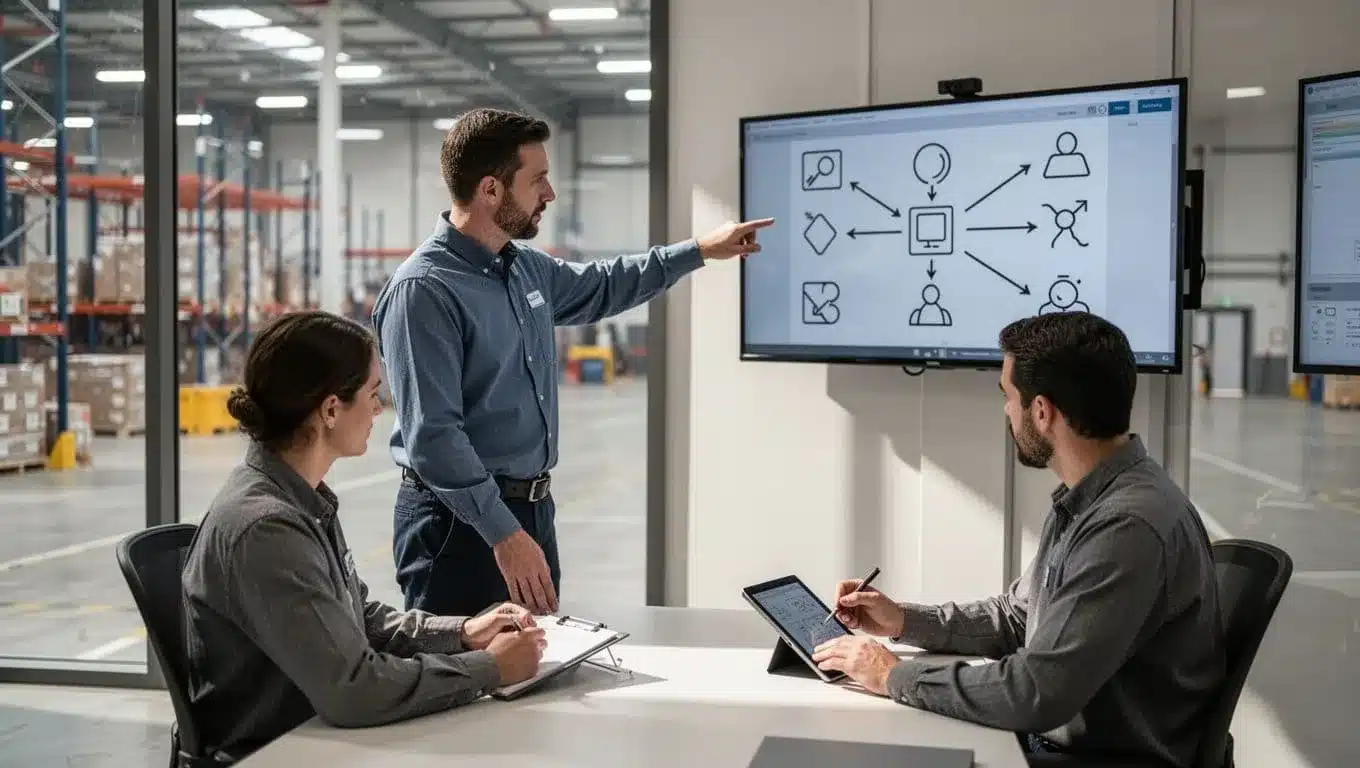
A good partner should be able to map EDI activity into your actual operation, including:
- receiving against inbound documents
- pick and pack logic tied to order data
- shipping updates that reflect what left the dock
- billing inputs that stay aligned with warehouse events
- client communication that does not depend on manual email cleanup
This matters even more if you run mixed connectivity. Many 3PLs now juggle EDI, APIs, flat files, and client-specific exceptions at the same time. Recent 2026 guidance from Orderful’s integration partnership guide makes the same point: modern partners need to support open, flexible connections across older and newer systems.
If a vendor cannot show how its setup fits the flow between order intake and shipment confirmation, you are not buying clarity. You are buying more handoffs.
Make sure support and implementation are part of the plan
Software alone will not clean up a bad rollout. EDI projects succeed when someone owns process mapping, onboarding, training, testing, and issue response after go-live.
That is why support should be part of the buying decision, not an afterthought. Ask who handles trading partner setup, who helps define warehouse logic, how testing works, and what happens when a client launches with unusual routing or document rules. If the answer is “your team can figure that out,” expect delays and rework.

For buyers, a practical checklist is simple. First, confirm there is a real onboarding plan. Next, ask how users are trained on day-to-day tasks, not just admin settings. Then check how quickly support responds when orders stop flowing or data starts failing validation. Finally, ask whether the provider helps refine workflows after launch.
This is where Leanafy has a clear edge. The product is backed by hands-on implementation, training, and process support, so the team is not left stitching the project together alone. That matters for 3PLs because warehouse teams need a system that works under pressure, not just one that passed a demo. If your current stack makes every new connection feel heavy, these signs you’ve outgrown your WMS are often the same signs your EDI model needs an upgrade too.
A buyer should treat implementation and support as part of the product. If those pieces are weak, the system will feel weak on the floor.
The best EDI partner is not just the one with the most documents supported. It is the one that helps your team run the warehouse with fewer workarounds.
Choose a platform that can grow with your client base
A partner that fits today can still become a bottleneck next year. That is why smart 3PLs ask what happens when they add new clients, new sales channels, more warehouses, more order volume, or a wider mix of integrations.
Growth usually does not arrive one piece at a time. A new client may bring retail EDI, marketplace feeds, custom labels, and billing rules all at once. If your platform needs special handling every time, growth turns into a string of side projects. That slows launches, raises support costs, and wears out your ops team.

So ask direct questions. How many trading partners can the system support without major rework? How does pricing change with higher volume? Can it handle hybrid EDI and API needs? What happens when you open a second site or onboard a client with very different routing rules? Recent 2026 market guidance keeps pointing toward hybrid EDI plus API support, cloud-based scale, and faster onboarding as core buying factors, not optional extras. CRSTL’s provider selection guide also stresses WMS compatibility because weak integration tends to show up as warehouse errors later.
Leanafy fits this growth path well because it is built around multi-client warehouse operations, not one-off connections. Its 3PL software for high-volume fulfillment reflects what growing operators need most: flexible integrations, support for more client complexity, and room to add volume without rebuilding the process.
For buyers still comparing options, keep the scorecard simple. If the partner fits your current warehouse flow, includes real implementation help, supports responsive ongoing service, and scales with new clients and sites, you are looking at a serious option. If any one of those areas is shaky, the risk is not theoretical. It will show up in slower onboarding, more manual fixes, and harder-to-keep client promises.
Conclusion
3PL warehouses choose Leanafy because it connects EDI to the work that actually happens on the floor. That means fewer manual fixes, cleaner order flow, and a system that helps teams support more clients without adding chaos.
Just as the pressure starts with retailer rules and client demands, the answer starts with one connected warehouse platform that keeps data and execution aligned. When EDI, inventory, shipping, and client visibility stay in sync, it’s easier to scale with confidence.
If you’re comparing options for your 3PL, it’s worth looking closely at whether Leanafy’s Retail Pro EDI integration reflects the kind of fit, control, and day-to-day usability your operation needs.