

Running a 3PL warehouse means juggling many clients, thousands of SKUs, and strict rules from every direction. Each brand wants custom handling, every retailer has its own compliance checklist, and customers expect same-day answers on inventory and tracking. Without the right tools, your team spends all day putting out fires instead of growing the business.
That is where a warehouse management system (WMS) comes in. A WMS is simply the software that runs your warehouse, from receiving and storage to picking, packing, and shipping, while keeping inventory accurate in real time. For 3PLs, it also needs to handle many clients at once, each with different rules and billing models.
Leanafy is a modern cloud WMS that many operators see as the best WMS for 3pl Warehouse operations. It is built for multi-client work, high order volumes, and complex workflows, without forcing you into rigid processes. As you add new brands, channels, or warehouses, Leanafy scales with you instead of slowing you down.
What makes it stand out is the way it connects the whole operation. You get real-time visibility into inventory, orders, and labor, across all clients and locations, in one place. Its multi-client support, with client portals and custom rules, keeps brands happy while your team works from a single, clean system.
On top of that, billing automation turns storage, handling, and special services into accurate invoices instead of messy spreadsheets. Strong compliance tools help you track batches, expirations, and regulated products so audits feel routine, not scary. In the rest of this guide, you will see how Lean WMS features for 3PL providers turn these ideas into daily wins on your warehouse floor.
What 3PL Warehouses Really Need From a Modern WMS

Before you compare features or watch demos, it helps to be clear on the real problems a 3PL warehouse has to solve. A single-company warehouse can survive with basic tools and workarounds. A true 3PL, with many brands and billing models, will hit a wall fast if the system is not built for that complexity.
This is where the best WMS for 3PL warehouse growth must start: with the day-to-day pain on your floor, not with a long feature checklist.
Why 3PL operations are more complex than single-company warehouses
A 3PL does not run “one warehouse.” It runs many virtual warehouses under one roof.
You are storing and shipping products for different clients at the same time, and each one expects you to treat their stock like it is the only thing in the building. That means:
- Separate inventory by client so pallets, cases, and units never get crossed.
- Different rules for each brand, such as carton labeling, carton size, carton count per order, or routing guides.
- Unique SLAs for each client, like same-day ship cutoffs, cold-chain rules, or channel-specific packing steps.
If stock gets mixed, you risk shipping the wrong client’s inventory, missing SLAs, and eating chargebacks. Even a “small” error, like putting one client’s lot into another client’s bin, can spark write-offs, tense calls, and unpaid invoices.
On top of that, each client needs its own billing logic and its own reporting view, while your team works from a single, shared process. That is why generic inventory systems, or tools built for just one company’s stock, quickly fall apart in a 3PL setting.
Common WMS headaches in 3PL warehouses
Many 3PL teams pick a system, then end up back in Excel because the WMS does not match how they work. Common pain points show up fast:
- Poor visibility: You cannot see true on-hand by client, by lot, or by location. Your team spends time “hunting” in the aisles.
- Manual spreadsheets: Put-away rules, special handling notes, and storage billing all live in side files that only one person really understands.
- Missed expiration dates or lots: The system tracks quantities, but not FEFO or batch history, so staff pick the wrong stock for foods, supplements, or cosmetics.
- Billing mistakes: Storage, handling, and project work are tracked manually. You lose revenue from missed charges and fight with clients over unclear invoices.
- Slow onboarding for new clients: Every new brand means more custom rules, manual setups, and weeks of trial and error before the operation runs clean.
- Systems that do not scale: Things feel fine at 5 clients, then fall apart at 15. Screens slow down, workarounds grow, and staff cannot keep up with volume.
Any system that calls itself the best WMS for 3PL warehouse operations has to fix these problems at the root, not just add more reports on top of the chaos.
For a deeper look at how WMS choices impact growth, you can review how WMS boosts 3PL growth in 2025 across different types of operations.
Must-have features in the best WMS for 3PL warehouse growth
Once you are clear on the pain, the must-have features become much easier to define. The right WMS for a 3PL should give you:
- True multi-client inventory: Clean separation of stock, rules, and reporting per client, even when items share SKUs or barcodes.
- Strong permissions and roles: Clients see only their data, and staff see only what they need, with audit trails for every move.
- Billing rules by client: Flexible charging by pallet, location, order, unit, or service so invoices match each contract and stay accurate.
- Real-time tracking: Live inventory, order, and activity views so you can answer client questions in seconds, not chase updates by radio.
- Mobile scanning on the floor: Simple, fast handheld workflows for receiving, put-away, cycle counts, and picking, which cut errors and rework.
- Deep integrations: Native links to ERPs, marketplaces, and shipping tools so orders and inventory flow without copy-paste, backed by extensive third-party integrations for 3PL warehouses when you add new channels.
- Support for regulated and sensitive goods: Lot, batch, and expiry tracking, plus handling rules for items like hazmat, alcohol, or food-grade stock.
When these pieces come together in one clean platform, your team can grow clients and order volume without losing control. In the next section, you will see how Leanafy checks all these boxes and turns them into practical daily workflows that actually work on a busy 3PL floor.
How Leanafy WMS Solves Core 3PL Warehouse Challenges
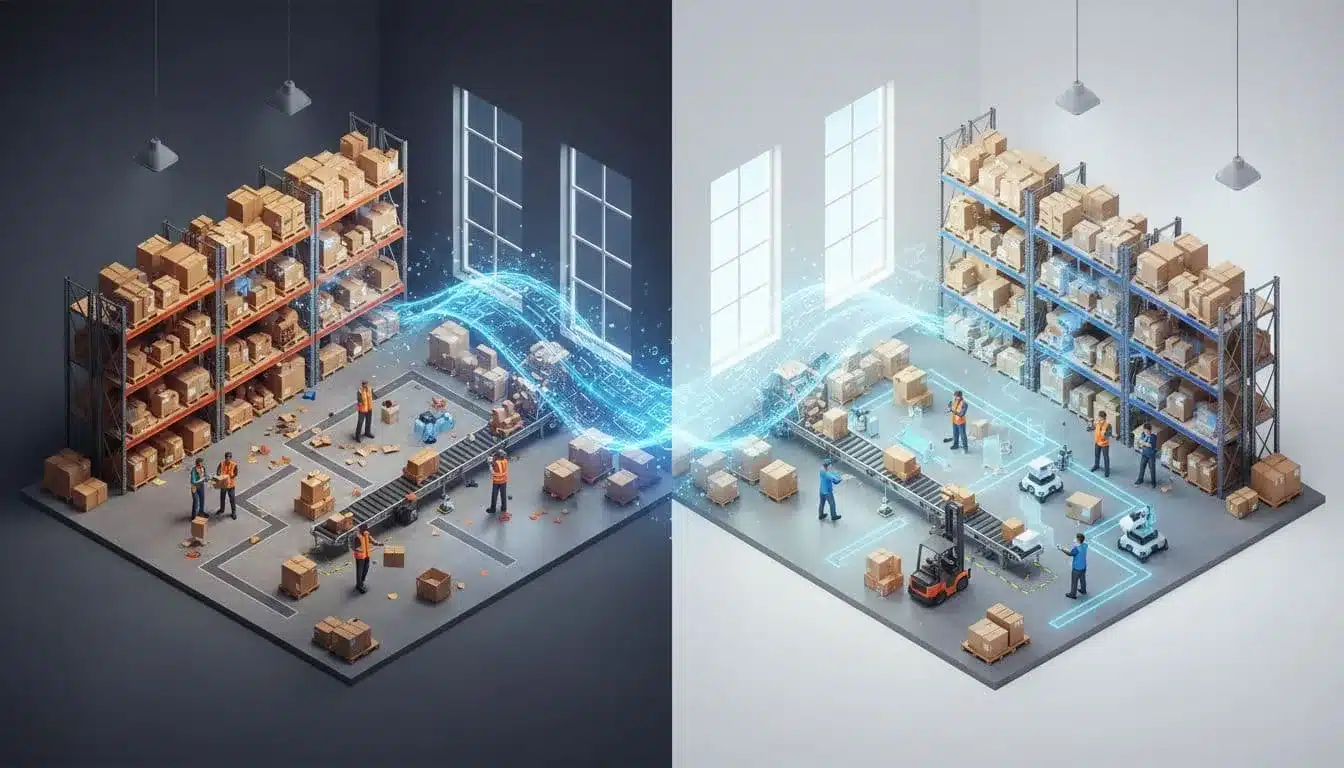
Everything described so far comes together in how Leanafy actually runs your operation day to day. This is where you see if a system really deserves to be called the best WMS for 3PL warehouse growth, or if it is just more software noise.
Leanafy focuses on the real pressure points for 3PLs: multi-client control, live visibility, floor productivity, clean billing, and compliance. Here is how it solves them in practice.
True multi-client control without inventory mix-ups
In a 3PL, each client expects a private warehouse, even when they share your racks. Leanafy is built around that idea.
Every piece of stock is tagged with a client, not just a SKU. The system keeps inventory, orders, and workflows separated by client, while your team works in one shared interface. That means:
- Client-specific locations and allocation rules
- Client-level order priorities and cutoffs
- Client-only reporting, portals, and permissions
Pickers see exactly what belongs to each brand. They never see mixed instructions that cause cross-client errors. If two clients carry the same item, Leanafy still treats them as two separate inventories with their own rules.
This structure pays off when audits hit. You can pull client-by-client inventory history, movements, and cycle counts in seconds. That clarity lowers write-offs, protects your margins, and builds trust when clients want proof that their stock is safe and properly handled.
Real-time visibility and tracking from receiving to shipping
Leanafy tracks every unit from the moment it hits your dock until it leaves on a truck. You get a live picture of:
- What arrived and where it went at receiving
- Which bins, zones, or temperature areas hold each SKU
- Which orders are waiting, picking, or staged for shipping
Batch and lot tracking keep the full story of each product. You can see which lot is in which bin, which orders used it, and where those shipments went. That is key for recalls or quality issues, especially for food, cosmetics, or supplements.
Because location and status data update in real time, your team has fast answers when a brand asks, “Where is my order?” A supervisor can open the order, see that it is in picking or loading, and respond on the spot. Tie that with strong integrations like CommerceHub Integration for 3PL Order Management and you also sync inventory and tracking back to retail partners without extra clicks.
The result is fewer “lost” orders, less time chasing updates over radio, and cleaner on-time performance across all clients.
Mobile-first workflows that make pickers and packers faster
Leanafy is built to run on phones and tablets, not just expensive RF guns. Your team can use affordable Android or iOS devices with barcode scanners or camera scanning, which keeps hardware costs down and makes hiring easier.
Mobile workflows guide staff through each task:
- Receiving screens walk workers through scanning ASN lines
- Putaway tasks suggest the best location based on rules and capacity
- Picking routes are optimized to cut walking time and backtracking
- Packing screens confirm weight, contents, and labels before sealing
Because steps are guided on-screen, new hires ramp faster. Many 3PLs see new workers productive in days, not weeks, since they follow clear prompts instead of memorizing aisle maps and special rules.
Barcode validation at every step cuts pick and pack errors without heavy IT investment. You get the performance of a traditional RF setup, but with simpler hardware and friendlier interfaces that your team actually likes to use.
Automated billing and flexible pricing models for each client
Manual billing is one of the biggest hidden drains for 3PLs. Missed storage days and unbilled projects can erase profit from an entire client. Leanafy fixes that by treating billing as part of operations, not an afterthought.
As work happens, the system logs chargeable events by client:
- Storage by pallet, bin, cubic foot, or custom locations
- Handling events like receiving, putaway, picking, and packing
- Value-added services such as kitting, relabeling, or rework
- Accessorials like rush fees, custom packaging, or special projects
These events feed directly into client-specific billing rules. You can bill per pallet, per order, per line, per unit, or per service, depending on each contract. At invoicing time, Leanafy builds detailed, itemized bills without manual tallying.
Because every charge is tied to a system event, you have a clean audit trail when a client questions an invoice. Disputes drop, collections are faster, and your team spends less time rebuilding spreadsheets. If you also bring in orders from carts with tools like the 1ShoppingCart to WMS Automated Order Transfer integration, you extend that automation across the full order flow.
Compliance, temperature control, and handling regulated products
Regulated products raise the stakes. If you mishandle one batch of pharma, food, or cold-chain goods, you are not just dealing with returns, you are dealing with regulators.
Leanafy gives you compliance-grade traceability without forcing you into a rigid setup:
- Lot and batch tracking across all movements and orders
- Expiration date and FEFO rules to pick the right stock first
- Temperature and humidity monitoring by zone, with alerts when readings drift
- Full audit trails showing who did what, when, and for which client
You can prove that a lot stayed in the right temperature band, moved through approved zones, and shipped out within its shelf life. If a recall happens, you can find every affected pallet, bin, and order in minutes, then lock or quarantine stock inside the system.
This level of control lets you say “yes” to more demanding clients, like pharma brands or high-end food suppliers, without adding layers of manual tracking. It turns compliance from a constant worry into a sales advantage and helps you position Leanafy as the best WMS for 3PL warehouse operations that need both speed and strict control.
Why Leanafy Stands Out as the Best WMS for 3PL Warehouse Scalability

Scalable growth for a 3PL is not just about handling more orders. It is about taking on more clients, more channels, and more locations without drowning your team in complexity or IT cost. This is where Leanafy really proves itself as the best WMS for 3PL warehouse operators that want to grow with confidence instead of adding overhead every time they scale.
Leanafy’s cloud-first design, fast onboarding, strong integrations, and secure performance all work together so you can say “yes” to growth without slowing your operation down.
Cloud-based and easy to access from anywhere
A cloud WMS lets you grow without buying racks of servers or hiring a big IT team. Leanafy runs in the cloud, so all you need is a browser and a connection. The platform handles the heavy lifting behind the scenes.
That means:
- No capital tied up in on-site servers
- No long upgrade projects or manual patches
- No waiting on local IT when something breaks
Managers can check live KPIs from home at night, on a tablet in a different building, or on the road between client visits. A supervisor can pull up inbound queues, order backlogs, and dock performance from their phone while walking the floor. Everyone sees the same real-time data.
For multi-building or multi-site 3PLs, this is a big win. Teams in different warehouses work in one shared system, with client and location filters to keep views clean. When you add a new site, you configure it in the cloud instead of wiring up new hardware. If you want a deeper dive into this approach, you can explore the Cloud-Based WMS for 3PL Providers overview at https://leanafy.com/cloud-based-wms-3pl/.
Automatic updates keep security, features, and performance current without downtime windows that stop your shifts. The platform grows with you, so your tech stack does not become a bottleneck when volumes spike.
Fast onboarding for new clients and new warehouse locations
Growth for a 3PL lives and dies by onboarding speed. Every week you spend setting up a new client is a week of delayed revenue. Leanafy is built to shorten that gap.
Instead of rebuilding everything from scratch, you can:
- Use templates for common client types, like DTC brands, wholesale, or retail-compliance accounts
- Reuse standard workflows for receiving, putaway, picking, and billing, then layer client rules on top
- Copy client-specific settings, such as carton labels, allocation rules, and billing schemes, then tweak the details
For example, when you sign a new skincare brand that looks a lot like an existing client, you clone the base configuration, adjust SKUs, storage rules, and SLAs, then go live. Your floor staff still follow the same familiar flows. That cuts training time and reduces risk.
The same is true for new buildings. You bring up a new warehouse by copying proven zone layouts, location types, and task rules from an existing site. You are not “relearning” how to run your network every time you expand.
Faster onboarding means:
- Shorter time to value for each new client
- Less disruption for your team
- Quicker payback when you invest in new space
This is how a WMS supports long-term expansion instead of slowing it down.
Integrations that connect your 3PL to the rest of the supply chain
As your 3PL grows, your tech stack grows with it. New clients bring new ERPs, ecommerce platforms, shipping tools, and accounting systems. If those tools do not talk to your WMS, your team pays the price in copy‑paste work and errors.
Leanafy is built to connect. It integrates with:
- ERPs for purchase orders, inventory, and financial data
- Ecommerce platforms like Shopify or other carts for order import and stock sync
- Shipping systems and carriers for labels, rates, and tracking
- Accounting tools for billing exports and revenue tracking
Orders flow in automatically, inventory updates in real time, and invoices move to your finance tools without typing the same numbers into three systems. That cuts labor, but more important, it cuts mistakes that damage trust with your clients.
For a growing 3PL, this connectivity is what lets you add new brands and channels without adding headcount at the same rate. One team member can manage more volume because the WMS keeps data in sync across the stack. To see how this integration strategy supports scaling, the Leanafy lean inventory management system at https://leanafy.com/lean-inventory-management-software/ shows how inventory, shipping, and rates tie together.
The result is a connected supply chain where your warehouse is not an isolated island, but a live data hub that keeps clients and partners in step.
Performance, reliability, and security that 3PL clients expect
As you grow your client list, your reputation becomes your biggest asset. Brands trust you with their stock, orders, and data. A WMS outage or data leak can damage that trust in a single day.
Leanafy is built with that risk in mind. It focuses on:
- High uptime, so your team can keep working through peaks and long shifts
- Data security with encryption in transit and at rest, plus strong hosting practices
- Role-based permissions so users only see and do what their job needs
- User access controls, including login policies and audit logs for key actions
You can limit a client user to view only their own inventory and order data. You can restrict a temp worker to picking tasks in a single building. Every action in the system leaves a trail, which helps when you investigate issues or pass audits.
For 3PLs that want to win larger brands and high-volume contracts, this level of stability and control is not optional. It protects your clients, but it also protects your own business from avoidable risk.
When you combine that reliability with cloud access, fast onboarding, and deep integrations, you get a platform that supports long-term growth. That is what sets Leanafy apart as the best WMS for 3PL warehouse scalability, not just this year, but for the expansion plans you have lined up next.
Real-World 3PL Outcomes With Leanafy WMS
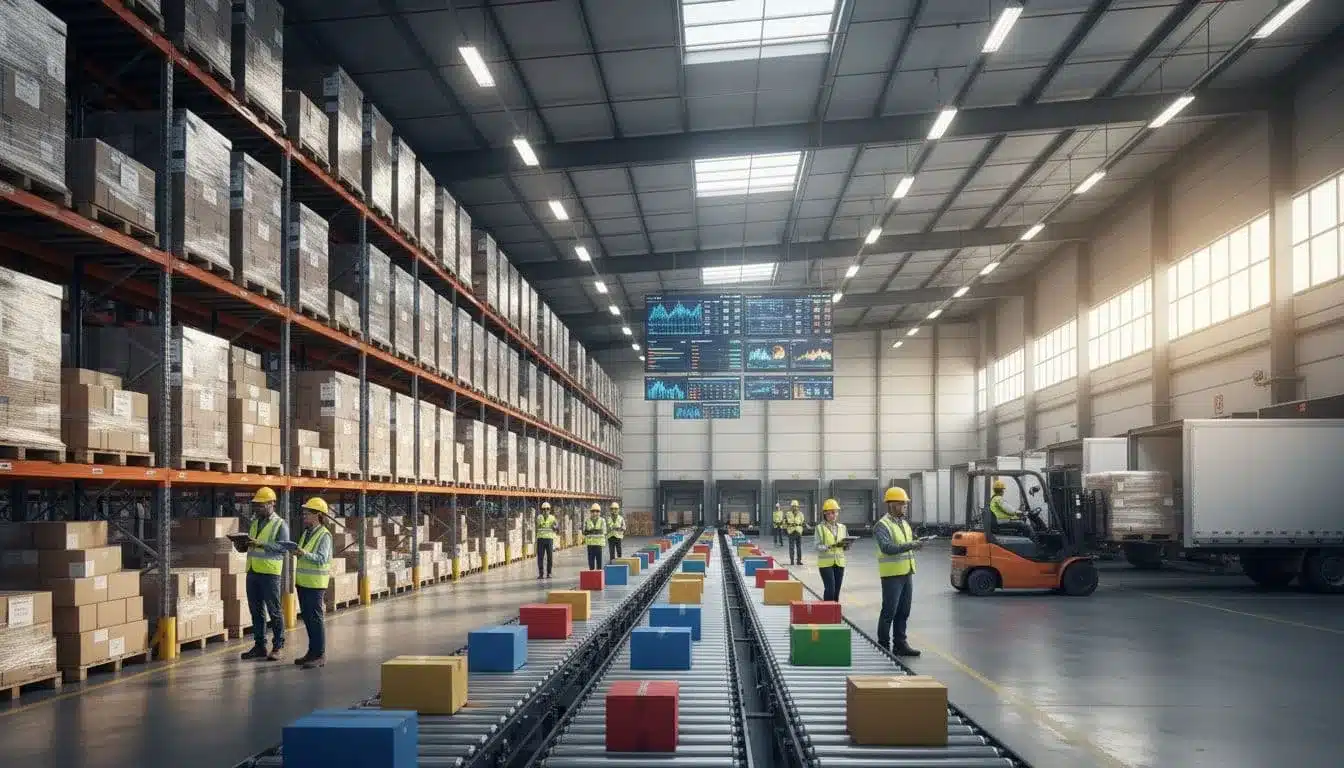
When you look at the best WMS for 3PL warehouse growth, features only matter if they turn into real, everyday wins. With Leanafy, those wins usually show up as fewer mistakes, faster cycles, less admin work, and a team that finally has room to think about growth instead of chasing problems.
Fewer errors, faster order turnaround, and happier clients
Picture a 3PL that ships for 25 brands. Before Leanafy, pickers worked off printed lists, orders were re-picked several times a day, and customer service spent hours explaining missed cutoffs.
After Leanafy goes live, a typical pattern looks like this:
- Picking errors drop because staff scan locations and items at each step. Many teams see mis-picks shrink to a small fraction of what they were.
- Order turnaround speeds up since mobile tasks guide workers through the best route. What once took 90 minutes to move an inbound pallet to pick locations, now takes closer to an hour.
- On-time performance climbs as the system organizes work by SLA, client, and cutoff time. Priority orders surface to the top of the queue instead of hiding in a pile.
- Customer complaints fade because brands get clear tracking and accurate inventory. Support teams spend more time on account strategy and less on “where is my order.”
Across a month, this shift feels big. You might see thousands of orders ship with only a handful of issues, instead of chasing dozens of daily mistakes. That kind of consistency is what turns one-time projects into long-term contracts, especially when you back it with the kind of tools described in the Top 5 Reasons 3PL Warehouses Choose Leanafy WMS.
Cutting manual work in billing, reporting, and audits
Most 3PLs lose more time in the back office than they like to admit. Billing lives in spreadsheets, accessorials sit in email, and month-end means late nights.
With Leanafy, those hours start to shrink:
- Automated billing records storage days, handling steps, and value-added work as it happens. The team that once needed two days to build invoices might finish in a few hours.
- Built-in reports give each client a clean view of receipts, shipments, and inventory. You pull standard KPI reports in minutes instead of building custom pivots for every request.
- Full traceability makes audits much easier. You can show who received a pallet, where it sat, and which orders used it, all from one place.
The real gain is not just time saved. When billing is accurate and backed by clear data, you avoid revenue leakage and tense calls about disputed invoices. Managers can focus on pricing, capacity, and new deals instead of fixing broken data. This is where the best WMS for 3PL warehouse operations quietly boosts profit without adding more labor.
Scaling from thousands to millions of units without losing control
Growth is where weak systems crack. A 3PL might start with a few thousand units a week and a short client list. Then a new contract lands, peak season hits, and volume jumps several times over.
Leanafy is built so that jump feels controlled, not chaotic:
- Workflows scale as you add more clients and SKUs. You keep the same core flows for receiving, picking, and packing, while attaching rules per client instead of inventing new processes every time.
- Permissions and roles keep data clean as the team grows. New users see only what they need, which cuts mistakes and protects client trust.
- Automation handles volume, from task assignment to allocation rules and replenishment. Supervisors spend less time dispatching work and more time spotting bottlenecks.
A common story is a warehouse that once struggled at 3,000 orders per day, then, with Leanafy, handles several times that volume on busy weeks, using the same core team plus seasonal hires. The system keeps orders, inventory, and billing organized, so leaders can say “yes” to larger brands and higher peaks with confidence.
For a deeper look at how this kind of scale plays out in practice, the overview of Top 3PL Software for High‑Volume Fulfillment Centers 2025 shows how Leanafy supports fast growth without losing control of daily work.
Is Leanafy the Right WMS for Your 3PL Warehouse?

At this point, you probably know your operation needs more than quick fixes. The real question is whether Leanafy matches how your 3PL actually runs today and how you want it to grow tomorrow. This section helps you line up what you see on the floor with what the best WMS for 3pl Warehouse growth should deliver.
Key signs your 3PL has outgrown its current WMS or spreadsheets
There are some clear red flags that your tools are holding you back:
- Constant fire drills: Every day feels urgent, with supervisors chasing missing orders and updating clients by hand. Leanafy calms this down with live dashboards and clear task queues.
- Lost or “mystery” inventory: Items exist in the system but not on the shelf, or vice versa. With client-level locations and scan-based moves, Leanafy keeps stock and system in sync.
- Billing disputes every cycle: Clients argue about storage days, handling fees, and project work. Since Leanafy logs chargeable events as work happens, invoices come backed with proof.
- Heavy spreadsheet dependence: Key rules, rate tables, and client notes live in Excel owned by one or two people. Leanafy pulls those rules into the WMS, so they are shared, repeatable, and auditable.
- Slow onboarding for new clients: A “simple” brand still takes weeks to stabilize. Leanafy’s templates and client-specific workflows cut setup time and reduce trial-and-error on the floor.
- Compliance feels risky: You worry about lots, expirations, or audit questions. Leanafy tracks lots, batches, and movements so regulated accounts feel routine, not fragile.
If two or three of these sound familiar, you have likely moved past what your current system can handle.
Questions to ask when choosing the best WMS for 3PL warehouse operations
When you evaluate any WMS, line it up against a short, practical checklist:
- Multi-client control: Can it keep rules, inventory, and reporting fully separate per client, even with shared SKUs?
- Flexible billing: Does it support your actual contracts, such as storage by pallet or bin, plus handling, projects, and accessorials?
- Compliance and traceability: Can you track lots, expirations, and movements in enough detail for audits and recalls?
- Integrations: Does it connect cleanly to your key sales channels, ERPs, and shipping tools without constant IT work?
- Usability for your team: Will floor staff, supervisors, and office teams actually use it without constant hand-holding?
- Mobile access: Can workers run core tasks on handhelds and managers check status from anywhere?
Use these questions to score your current system, any vendors you are viewing, and Leanafy side by side. The system that consistently checks the boxes for multi-client 3PL work is usually the one that will support growth, not fight it.
How to evaluate Leanafy with your team and your clients
You get the best view of Leanafy when your real workflows are front and center.
Start with a quick mapping exercise:
- List your core flows, such as receiving, putaway, picking, packing, billing, and reporting, for two or three key clients.
- Note the weird parts, such as special relabeling steps, strict retailer routing guides, or temperature rules.
- Capture where things break today, like lost pallets, slow billing, or frequent mis-picks.
Bring that short list into a Leanafy demo and involve a mix of people: floor leads, supervisors, client success, and finance. Have each group walk through how they would do their daily work in the system.
Then, test it against your hardest scenarios, not the easy ones. For example, simulate an audit on a regulated client, or run through a high-volume DTC brand alongside a B2B wholesale account. If you work with direct-to-consumer brands, compare what you see with the process in the Complete DTC Order Fulfillment Checklist by Leanafy.
The more your team can say, “Yes, that is how we want to run this,” the closer you are to a fit. For many 3PLs, that moment is when they decide Leanafy is not just software, but the best WMS for 3pl Warehouse growth, stability, and client trust.
Conclusion
Choosing the best WMS for 3PL warehouse growth comes down to one thing: control without extra chaos. Leanafy gives you that control with true multi-client handling, real-time visibility, mobile workflows, automated billing, strong compliance, and easy scalability across sites and brands. All the moving parts that used to live in spreadsheets or tribal knowledge shift into one reliable system your whole team can trust.
When multi-client rules, inventory, and billing stay clean in the WMS, your days stop revolving around fire drills. Supervisors see what is happening as it happens, pickers follow clear mobile tasks, and finance gets accurate charges without late-night catch up. Instead of worrying about lost pallets, missed SLAs, or audit surprises, you can focus on new clients, new channels, and smarter pricing.
A strong WMS will not just tidy up your processes, it will turn daily chaos into a controlled, growing business that clients feel good about partnering with. If you want to see how this looks in practice, you can explore Leanafy’s warehouse management capabilities and book a live demo. Walk your team through your flows, ask the hard questions, and see if it feels like the best WMS for 3pl Warehouse operations you are building for the next stage of growth.